Craftsmanship
The Art of Terrazzo
The ancient tradition of Terrazzo or Venetian Seminato explained.
Nov 20, 2025

Terrazzo, also known as Venetian Seminato, is one of Italy’s most refined flooring traditions — a surface where craftsmanship, material knowledge and design converge into something both functional and deeply artistic. Born in Venice and perfected over centuries, it continues to define some of the world’s most prestigious interiors and architectural spaces.
At its core, terrazzo is created by embedding selected aggregates — marble, granite, quartz or other stones — into a cement or resin binder, then polishing the surface until it becomes smooth and luminous. The result is not just a floor, but a continuous, seamless surface with depth, texture and character. It is durable enough for public buildings and refined enough for private residences.
What makes Venetian Seminato truly special is the way it is made. Unlike industrial terrazzo systems based on prefabricated modules, traditional Seminato is executed entirely by hand on site. Every stone is chosen, distributed and positioned manually by skilled artisans. The process begins with preparing a cement-water mixture, followed by the careful addition and mixing of marble chips and other aggregates. These materials are then “seeded” onto the freshly laid base, according to a specific layout or decorative pattern.
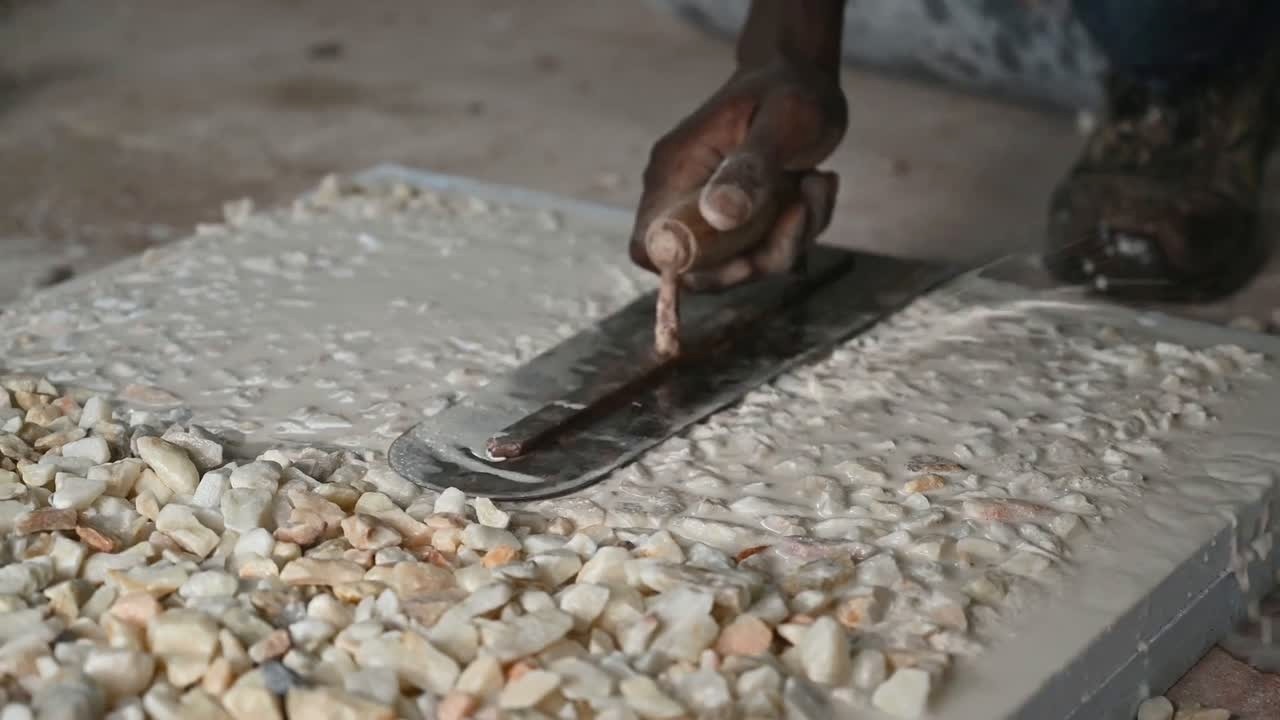
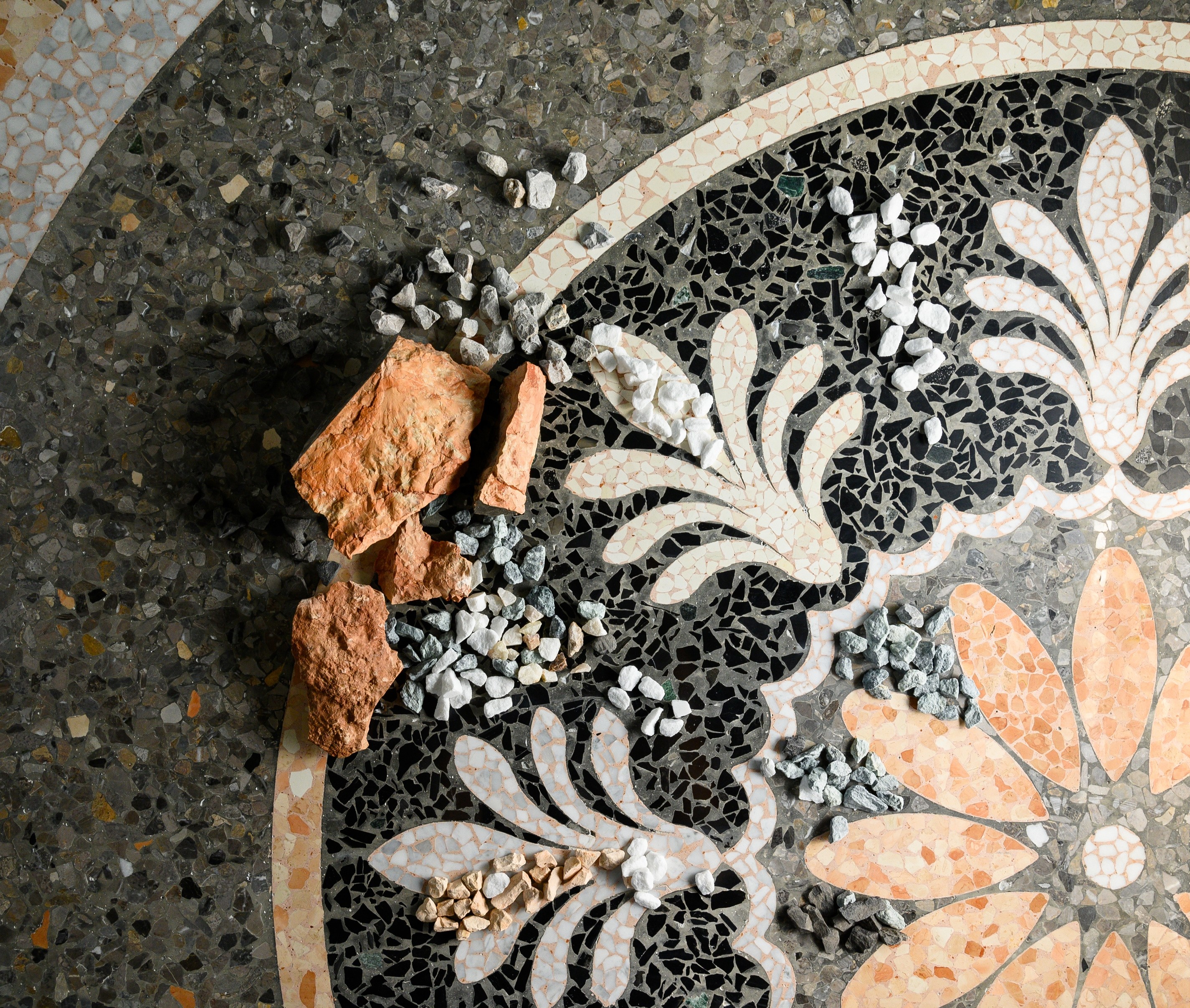
Terrazzo Process
Once the aggregates are placed, decorative metal or stone strips may be inserted to define geometries or separate color fields. This technique allows for the creation of intricate borders, frames and motifs — from classical Venetian designs to contemporary graphic compositions. After seeding, the surface is moistened and left to partially set, before being compacted through rolling and manual beating, ensuring the aggregates are firmly embedded into the matrix.
The surface at this stage still looks like a simple cement floor. The transformation happens during the polishing process, which begins only after a curing period of at least 15 days. Using progressive abrasive techniques across multiple phases, the top layer is gradually revealed. The stones emerge, their colors intensify, and the floor gains its signature depth and softness.
Another distinctive aspect of Venetian Seminato is its versatility. It can be adapted for traditional or modern heating systems, including underfloor heating, with controlled thicknesses and structural layers to ensure performance and longevity. This technical adaptability is one of the reasons why terrazzo continues to be specified in luxury hotels, retail flagships, museums and private villas around the world.
Beyond technique, what defines the art of terrazzo is the design process. Specialized in-house design teams often collaborate directly with architects and designers to develop bespoke surfaces. Each project starts from a concept phase, with custom drawings, material selection and tailored samples produced specifically for the client. There are no standard patterns: every floor is unique, reflecting the identity of the space it belongs to.
Today, Venetian Seminato is no longer just a historical reference. It is a living tradition, capable of evolving with contemporary aesthetics while preserving its heritage. From historic landmarks in Italy to high-end boutiques, hospitality spaces and private residences around the world, it remains a symbol of Italian artistry, material culture and architectural elegance.
Let's
create
something
timeless
Whether you have a vision in mind or are just exploring, our team is here to bring beauty, purpose, and elegance to your space.